WHEN GRIEF FEELS CLOSE: After a frightening or violent event, grief can arrive in many forms. We may feel sadness, anger, numbness, fear, tenderness, laughter, disbelief—or very little at first. We may be grieving people we knew, a sense of safety, the childhood we want for our children, the world we thought we understood, and the Earth being plundered by Harpagons.
In the wake of the school shooting in Bend1 , in my home state of Oregon, and amid reports of violence against young people by the Forces de l’ordre françaises, in my birthplace, France2, this guide offers ways to pause, find steadier ground, and make space for what is moving through us.
You do not need to do every practice, feel a particular way, or turn pain into something meaningful. There is no right way to respond. Take what helps. Leave what does not.
You can stop at any point.
These creative and nature-based practices are invitations for reflection, not therapy or a substitute for professional support. If you are directly affected, feel unsafe, or find daily life becoming difficult to manage, please reach out to a trusted person or a qualified support service. You do not have to hold this alone.
ONE STEP AT A TIME
Choose a small practice. You do not need to feel calm or better afterward for the time to have mattered.
STEP OUTSIDE without asking NATURE to fix anything – [try this for 2 min] If it feels accessible and safe, spend a few minutes near a tree, in a garden, on a porch, or by an open window. Notice one ordinary detail: the edge of a leaf, a shifting cloud, the sound of rain, the temperature of the air. You do not have to find beauty or feel grateful. Simply notice what is here, alongside whatever you are carrying.
Come back to the PRESENT – [try this for 1 min] Let your eyes move around the room or landscape. Notice your breathing without trying to change it. Invite your senses to witness the present: Name one thing you can see, one sound you can hear, one smell you can identify, and one point of contact your body can feel. If focusing on the body feels uncomfortable, do not judge the feeling. Simply return your attention to your other senses.
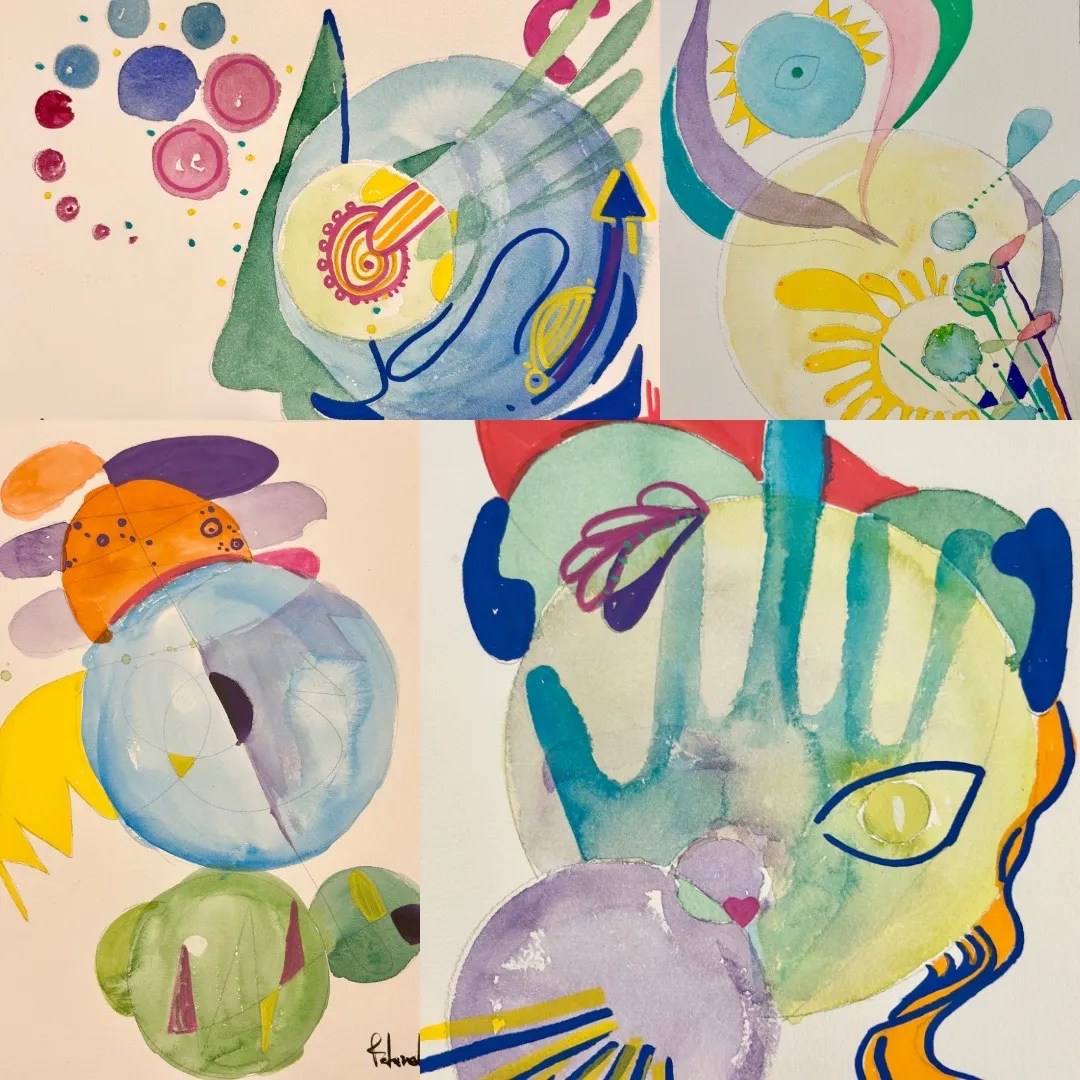
CREATE a small record of this MOMENT – [try this for 3 min] Expression is an option, not an obligation. On a piece of paper, doodle, draw shapes, pick a few colors that speak to how you feel. There is no need to make art that looks like anything.
One thing that might help me get through the next hour: __________________________________
Fold the page, keep it, tear it up, discard it, or leave it unfinished…
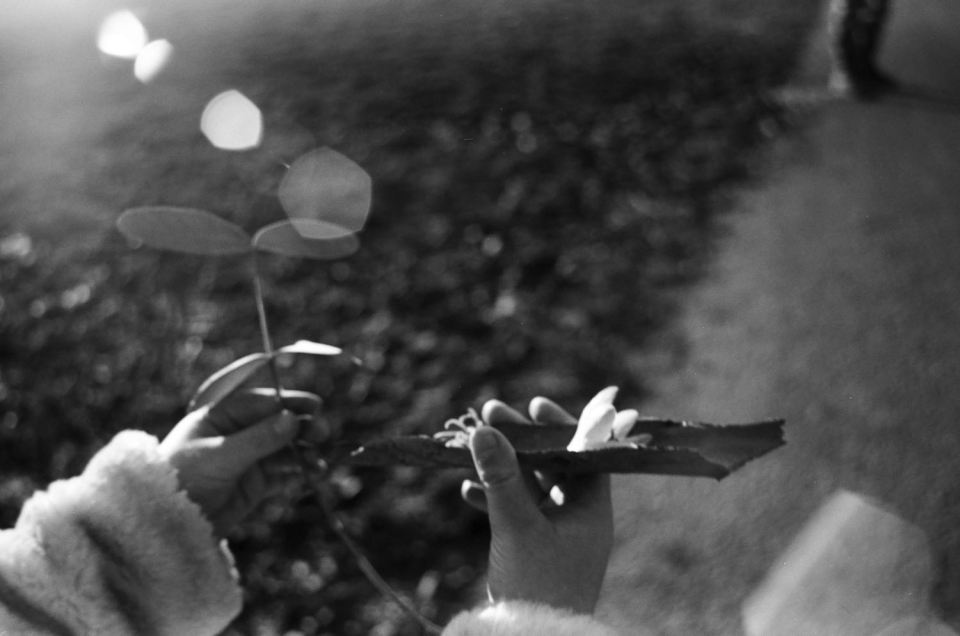
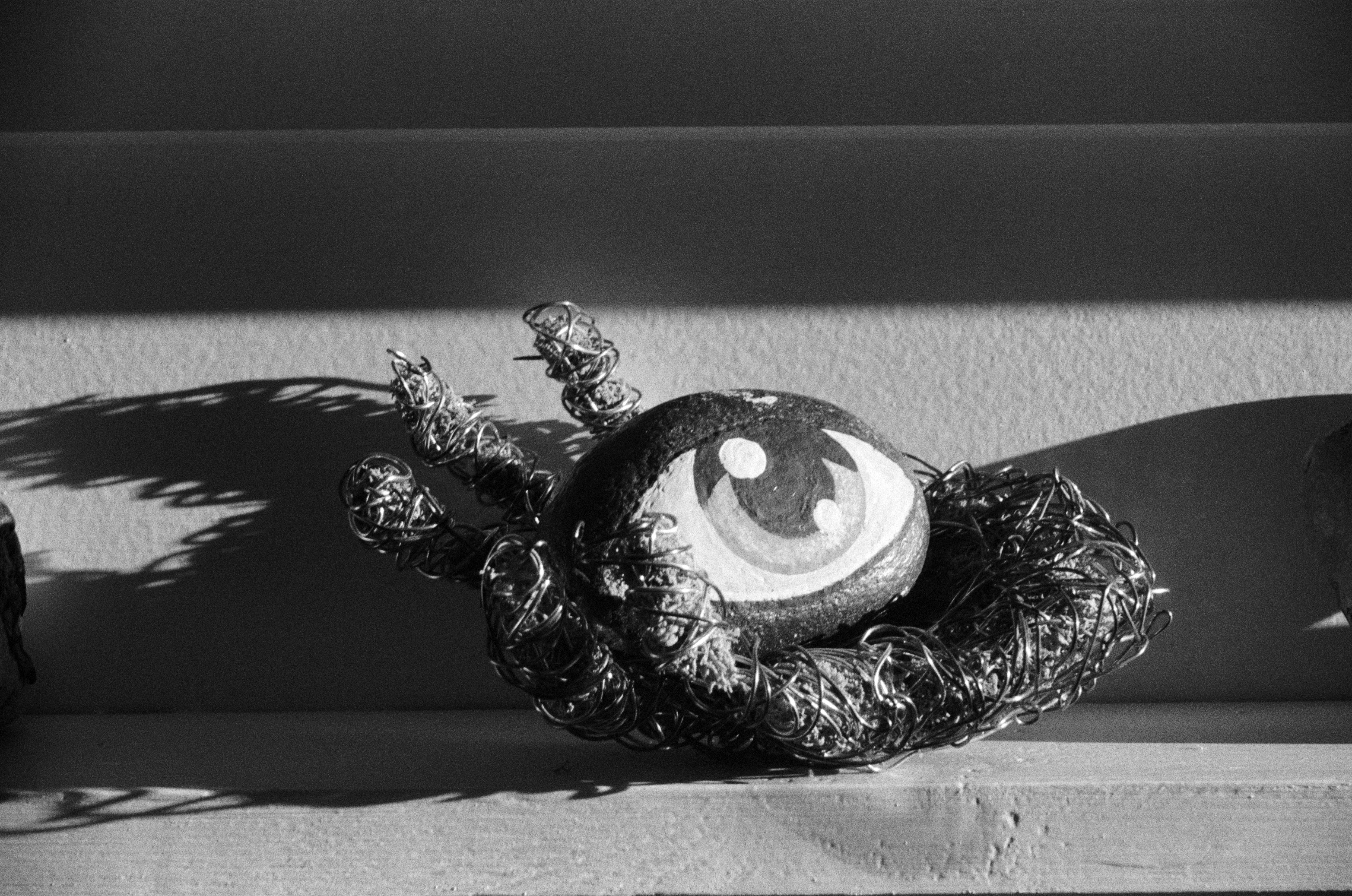
Let a small object hold a MEMORY – [try this for 3 min] Choose a stone, a fallen leaf, a photograph, a flower, a piece of fabric, or something ordinary that has found its way into your life. Hold it in your hand, place it nearby, or simply look at it. Notice what it brings up: a person, a place, a moment, a feeling, or nothing in particular. You do not have to find a memory. Give it a name, if you wish: a name, a word, a feeling, a question, or a few words of remembrance: what remains, what I miss, what I carry, what I cannot yet name.
Let it be what it is. You do not need to explain its meaning to anyone, or turn it into something beautiful or comforting. You might keep the object in your pocket, place it on a windowsill, or set it beside a photograph. You might return to it another day, or let it go. If the memory feels too close or overwhelming, put the object aside and bring your attention to something in the present: your feet on the ground, the sounds around you, or a person you trust. There is no need to hold on to a memory to honor it, and no need to let go before you are ready.
Make room for CONNECTION Send one simple message to someone safe: “I’ve been thinking about what happened. I don’t need you to fix anything, but could we talk or sit together?” You can also ask for something concrete: a meal, a walk, help with a task, or company while you do an ordinary thing. We often want to help, yet we may not know what another person needs. Asking and listening to the answer is a place to begin.
WHEN CHILDREN ASK QUESTIONS Children may hear fragments of news or conversations and try to make sense of them. Begin by asking what they have heard and what they understand. Listen to their questions, answer honestly in age-appropriate language, and acknowledge when you don’t know the answer. Let children guide the conversation, and reassure them that they can return to you with more questions. For additional guidance, explore Dougy Center’s resources for children and families
THE IMPORTANCE OF RITUAL: MAKING SPACE FOR WHAT WE CARRY
When grief feels difficult to name, we can sometimes approach it through gestures rather than words. Lighting a candle, placing a photograph beside a stone, walking with a memory, or gathering around an object can offer a simple way to acknowledge what matters to us.
In Embracing Grief, Sobonfu Somé writes about ritual from within her Dagara cultural and spiritual traditions, describing its role in connecting the individual with community, ancestors, and the sacred. Her words offer one perspective on how ritual can help us making space for sorrow and remain in relationship with what we have lost. Ritual takes many forms across cultures and communities. Ritual does not have to be religious, elaborate, or shared with others. It can be a small, intentional act that gives attention to a person, a loss, or a moment that matters. Let your own beliefs, relationships, and circumstances guide you; take what resonates and leave the rest.
“The purpose of rituals is to take us to a place of self-discovery and mastery…In this sense, ritual is to the soul what food is to the physical body… Rituals are participatory activities that involve the whole being: body, spirit, mind, and soul. In our rituals, we call in spirits, ancestors, and dimensional beings to guide us each step of the way. Rituals are a form of continuous prayer. They help us to consciously incorporate healthy, genuine spiritual evolution and to dwell in the sacred in a way that truly heals us.” — Sobonfu Somé, Embracing Grief
Other practices to explore, alone or in community:
- Creating an altar to remember and feel connected to ancestors, known and unknown
- Expressing grief through movement, dancing, vocal expression, or walking
- Exploring seasonal and nature-based rituals
- Recognizing numbness as one possible response to overwhelm, without forcing it to change
- Finding connection through peer support and shared reflection
- Exploring herbal traditions and seasonal practices with attention to cultural context and safety
- Trying gentle breathing practices and movements inspired by Traditional Chinese Medicine, if comfortable
When additional support may help – If distress persists, intensifies, disrupts sleep or daily routines, or feels too difficult to manage alone, consider reaching out to a qualified mental-health professional or support service. Seeking help is not a failure of resilience.
Trusted resources
Dougy Center — The National Grief Center for Children & Families Resources for children, teens, families, and the people supporting them, including guidance for talking with children after a school shooting or large-scale tragedy
988 Suicide and Crisis Lifeline — free, confidential emotional support by call, text, or chat, 24/7. Call or text 988, or use online chat
Disaster Distress Helpline — Support for emotional distress related to human-caused or natural disasters. Call or text 1-800-985-5990
Oregon YouthLine — Peer support for young people For young people ages 10–24. Call 1-877-968-8491, text teen2teen to 839863, or visit The YouthLine. Trained teen volunteers are available daily from 4–10 p.m. Pacific; adults answer calls at other times.
Immediate danger: Call 911
GRIEF DOES NOT NEED TO BE SOLVED TO BE MET WITH CARE:
Sometimes we need words. Sometimes we need quiet, movement, a witness, or a small act made with our hands. Sometimes the most supportive thing is to return to an ordinary task and let the feelings come and go in their own time.
My work brings together art, nature, writing, and seasonal practices to create room for reflection and connection. Through Tending Grief and my creative nature retreats, I offer ways to notice, remember, express, and be alongside others. These workshops are grief-informed, not clinical treatment, and do not prescribe how anyone should grieve.
You are welcome to take one practice from this guide and leave the rest. You do not have to make something beautiful out of what happened. You only have to begin where you are.
With care,
Clara-Julia Peru
This guide is offered freely for personal use and sharing with attribution. It is educational and supportive, not medical advice, psychotherapy, or crisis care. Creative and nature-based practices affect people differently and are not a substitute for professional support.
- https://www.dougy.org/resource-articles/after-a-school-shooting-or-large-scale-tragedy ↩︎
- https://news.un.org/fr/story/2026/10/1159695 ↩︎
Discover more from Clara-Julia Peru
Subscribe to get the latest posts sent to your email.


1 Comment